How recruiters see the workforce over the next 12 Months

By Allison McLellan
Adapted by the Indeed Editorial Team
“[The] wave of reduced candidates [aged] 16 to 18 will create a major shortage [in] companies that are usually thought of as a place for a first job” is what one recruiter says about the struggles they see their team facing over the next several months.
This sentiment may ring true for many employers; the data-driven Indeed and Glassdoor joint 2023 Hiring and Workplace Trends Report indicates that deep-seated dynamics will continue to be a major force in recruitment, creating a long-term gap between employer demand for new recruits and the supply of candidates. This means recruiters will have to adjust their recruitment processes to find talent.
At the end of 2022, Indeed’s Voice of the Customer team extended a survey to their research community of leaders of medium-to-large businesses who use Indeed on a regular basis, known as Indeed Insiders. This survey not only asked about changes and challenges their recruiters observe in today’s workplace, many of whom echoed recruitment trends found in the report, but also about what they hope to see in the future of recruiting.
You have already heard from Indeed thought leaders about their strategies for navigating the hiring landscape today; now here are the thoughts from the talent professionals out in the field.
Drive more candidates to jobs on your career site with Sponsored Jobs
Learn moreOngoing recruitment challenges in the tight labour market
-[The] wave of reduced candidates [aged] 16 to 18 will create a major shortage [at] companies that are usually thought of as a place for a first job.
-[Our greatest hiring challenge will be the] continued shrinkage of the skilled labour force. Eventually these workers will not be seeking new jobs and opportunities and will look for stability.
As those struggling on the front lines of recruitment are already well aware, there is a wide gap between employer demand and supply of candidates, mainly due to demographic shifts. According to Indeed & Glassdoor’s Hiring and Workplace Trends Report 2023, there will be fewer people between 15 and 65 years old joining the workforce over the next decade. Combined with other trends, this means the supply of workers will dwindle.
However, there are still ways for employers to widen their talent pools:
- Immigration: turn to a global marketplace to promote recruitment in tight labour markets. Policies that allow immigrants quick access to employment widen avenues for talent acquisition. If remote work isn’t an option, many countries have eased visa requirements for certain categories of workers.
- Overlooked pools of workers: adopting flexible work policies in areas like scheduling helps businesses tap into various groups of workers, like those with criminal records; people with disabilities; older employees; and women, who struggle to combine work and family commitments.
- Automation technology: as the trends report states, technological advances can boost productivity without pushing up joblessness. Machines and the ever-evolving applications of digital technology can help fill gaps in the labour supply.
Difficulties meeting demands for increased pay
-[My concern is the] challenges with [the] need for more pay, especially with the [fear] of a recession among us.
-[It is difficult to fill] front line positions [due to] increased starting wages, while managing downturns or potential recessions.
Many employers touch on economic concerns and how they will impact their recruitment, a complex issue considering how, in the tight labour market, workers will continue to have the leverage to press for higher pay.
The CIPD Good Work index indicates that better pay and benefits is one of the main reasons employed U.K. workers are looking to quit their jobs, alongside increasing job satisfaction, a better work-life balance and the desire to do a different type of work. An increasingly tightening labour market, combined with inflation, has driven salary demands.
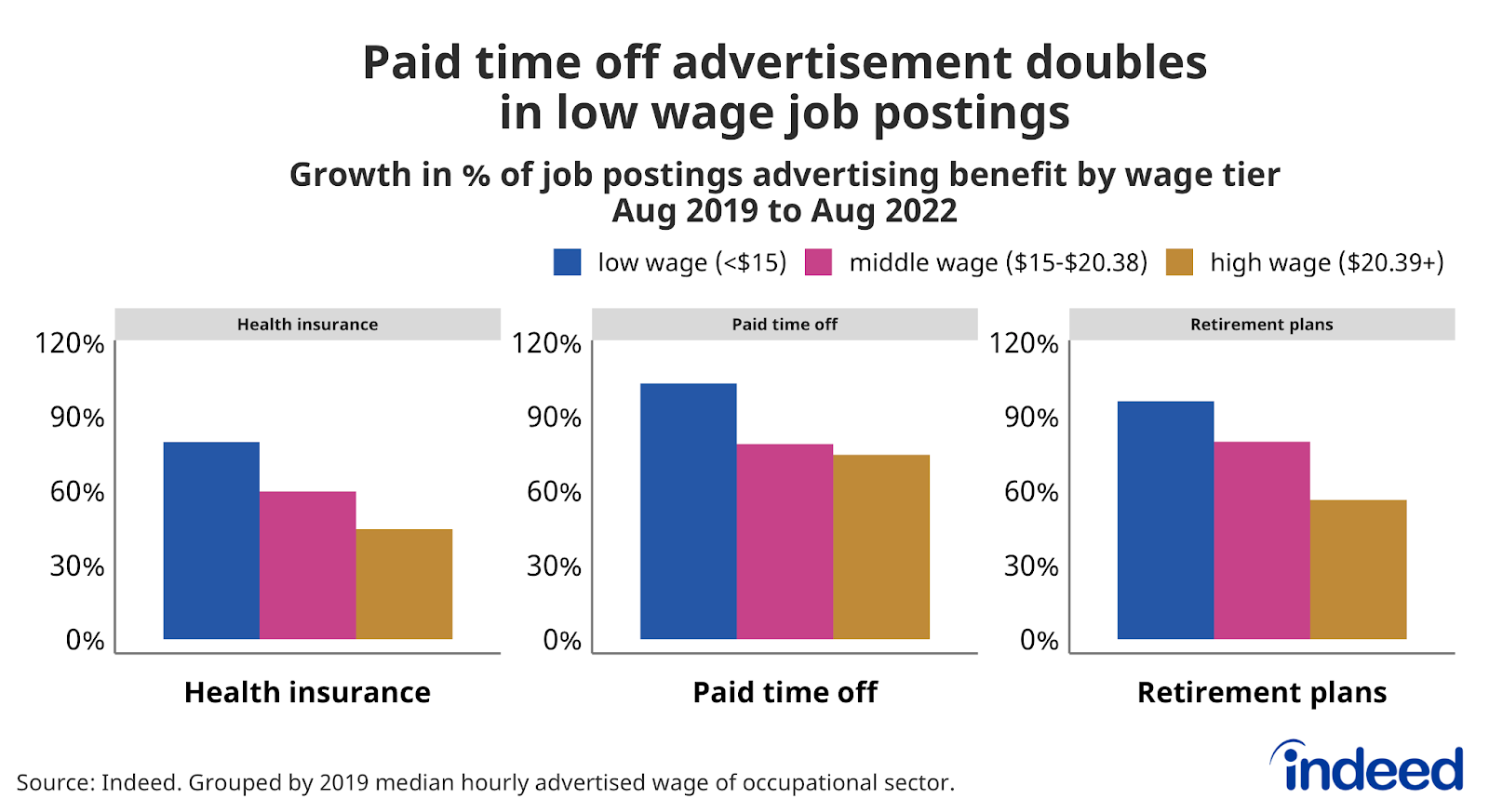
Employers struggling to meet higher pay expectations can better build out their holistic benefits and compensation packages to sweeten job offers. Benefits allow organisations to differentiate themselves from others, especially in service-sector positions, such as childcare or retail roles. For instance, as indicated in the graph below, paid time off increased by 17.5% in low-wage sectors in the US like personal care and home health from August 2019 to August 2022.
Similarly, access to commuter benefits grew in many of the industries with jobs that require in-person attendance. Something as simple as free lunches can also make the office more appealing.
Going all-in on worker wellbeing
-Employee ideals around what they value most, including flexibility, will continue to shape the workforce in 2023. I believe we'll continue to see a strong interest in individuals seeking out work with companies that not only align with their values, but provide them with support beyond the things they love to do outside of working hours.
-I genuinely hope that employers don't backtrack on all of the gains in work-life balance. Whether it's working from home, flex time, and even just a general sense of understanding, I hope they continue to expand.
When COVID struck the world and the workplace, it impacted many people’s mental health. This was reflected in an increase in the number of Glassdoor reviews indicating that employers offer mental health benefits, which increased through 2022.
Today, with workers in the driver’s seat, they have the ability to seek out employers that emphasise wellbeing at work, which includes helping staff manage stress and find satisfaction and purpose. According to Indeed’s Work Wellbeing 2022 Insights Report, 91% of respondents believe that how we feel at work matters, while only 50% report that their company is measuring happiness and wellbeing. Meanwhile, 40% of people say their expectations around happiness at work have increased in the last year.
To help ensure employees are satisfied, and thus more likely to stay at an organisation, employers must focus on understanding, measuring and supporting the wellbeing and happiness of their employees.
Continued demand for remote work
-I think we will see more employers trying to get employees back into the office and will see employees react negatively to this shift.
-Remote work, which was a necessity during the pandemic, will continue to thrive.
While some employers are attempting to shift workers back to the office, remote work will continue to be a large aspect of the workforce. A recent study by Indeed suggests that remote positions have substantial potential to attract a global pool of candidates.
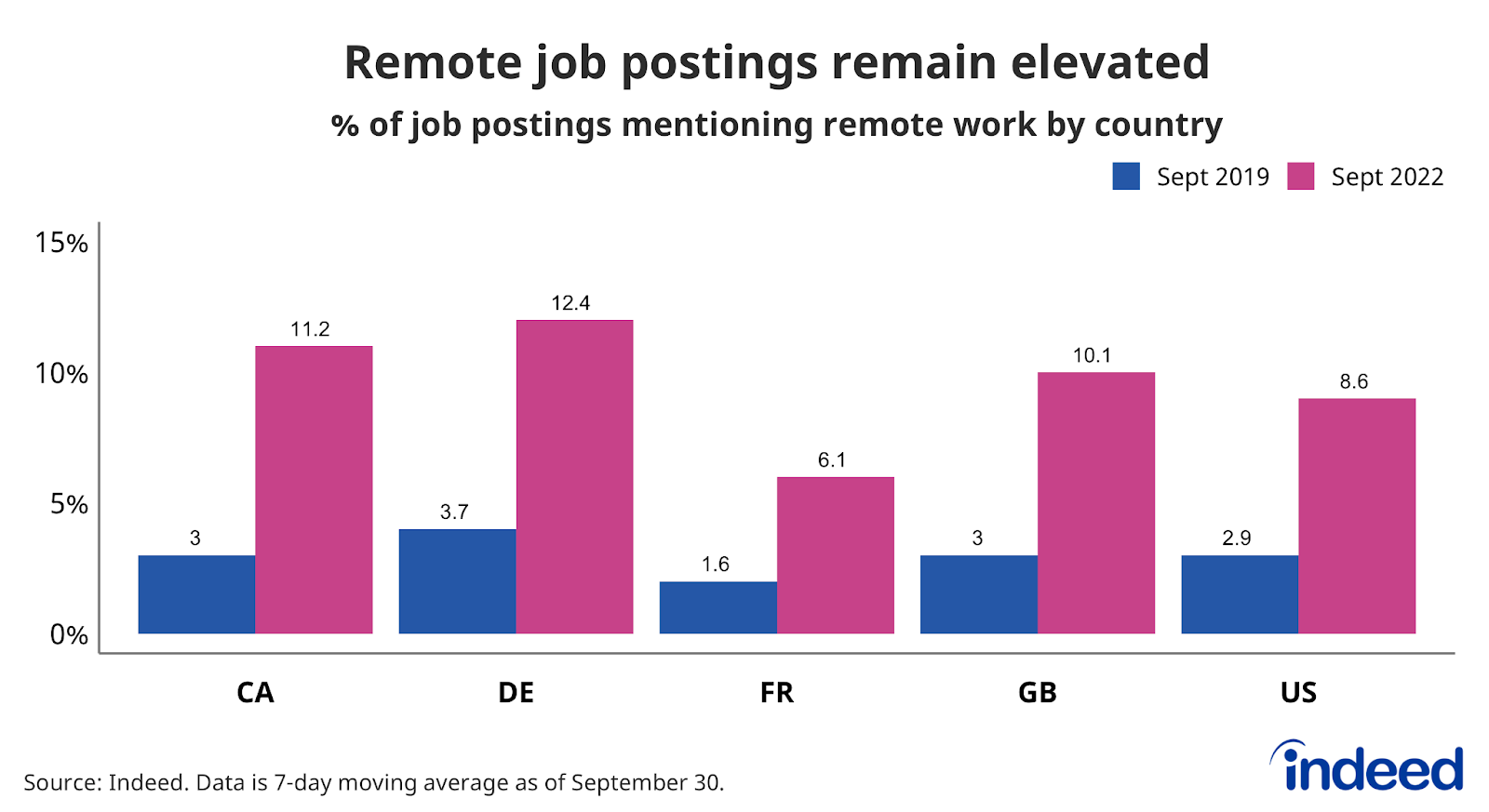
This trend came out of necessity during COVID, but workers’ successfully proving that they can work from home ensures this trend will persist for some jobs, and for workers’ preferences.
However, there are some challenges in accommodating remote work. It is estimated that 63% of U.S. jobs require onsite presence. Supporting hybrid and remote working will require more training and increasing access to digital technologies, as well as training workers on cybersecurity.
On Indeed, in-person employers are responding by offering signing bonuses more readily than companies recruiting for remote-friendly occupations.
Retention of current employees
-To find and retain employees, this year has been a challenge but each day we try and implement new ideas to keep everyone happy.
-[My hopes for hiring are] retention, retention, less turnover and retention.
When asked about their hopes for the new year, recruiters want to recruit more staff members amid rising challenges in the workplace, and hold onto those they have.
Going forward, it is important to be flexible as things continue to change and make your workers feel heard and valued. Focusing on each of these recruitment trends can help you retain more of your workforce.
Learn more about becoming a member of Indeed Insiders to have your voice heard on employer issues and ideas.
Drive more candidates to jobs on your career site with Sponsored Jobs
Learn more
Ready to get started?
Get insights and inspiration for the modern world of work
We’ll be in touch soon with the insights and inspiration you need to lead a thriving workforce.
In the meantime, check out our new Future of compensation report for cutting-edge insights on shifting expectations in employee pay, workplace benefits and compensation initatives.
Submit