Navigating the UK Labour Market in 2022

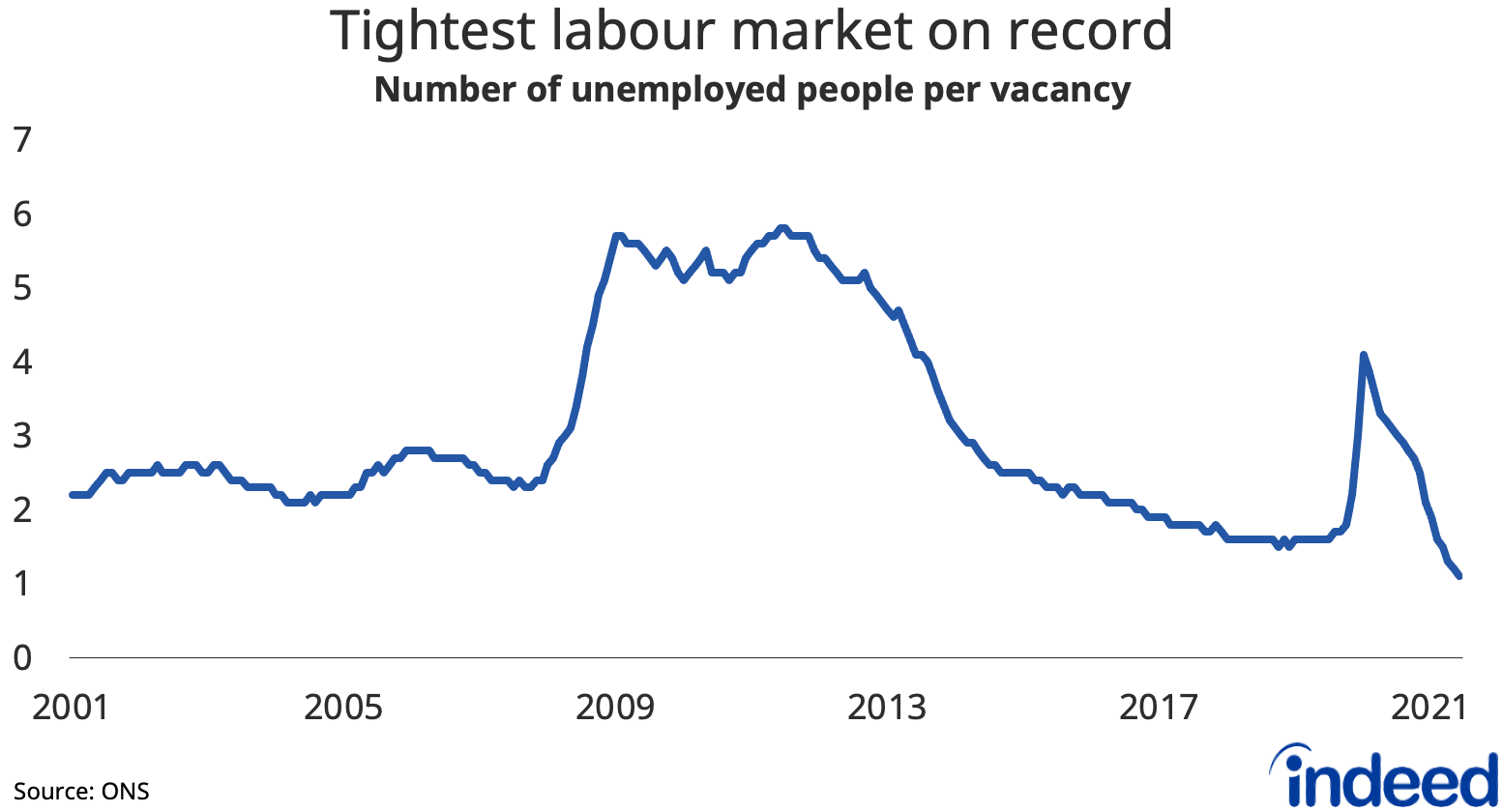
Hiring is off to a roaring start in the UK at the start of 2022, but candidates are in shorter supply than ever. According to a recent Office for National Statistics (ONS) report, the current job market in the UK is the tightest on record, with more than 1.2m vacancies reported at the end of December 2021, even as the employment rate increases and the unemployment rate decreases.
In all the years I’ve worked in the recruitment industry, I’ve never seen such a tight UK labour market with employees so firmly in the driver’s seat.
Attracting job seekers and retaining employees in the tightest labour market in decades are top priorities among the companies I talk with every day. That puts more control than ever in the hands of the talent we need to run our businesses and empowers them to grow their careers.
To their credit, they are using that control to demand more fulfilling jobs and work – and “fulfilling” means different things to different people. From higher pay to remote work to flexible shifts to child care and more, employees are sending a clear signal – give me what I need to thrive, or I’ll go somewhere else that does.
There are many names for this phenomenon – ‘The Big Quit,’ ‘The Great Resignation’ and ‘The Great Re-Evaluation’ come to mind. Whatever you call it, it is real. And beyond this immediate trend of employees finding the next great career move during the pandemic, the 2022 UK labour market is impacted by more secular trends coinciding with, but not caused by, the pandemic: a workforce increasingly made up of millennials and Gen Zs who are redefining the role of work in their lives, an aging workforce of baby boomers who are retiring in ever greater numbers, and jobseekers who expect potential employers to be taking active measure to improve the diversity of their workforce.
Drive more candidates to jobs on your career site with Sponsored Jobs
Learn moreThe hits just keep on coming
In 2022, the HR leaders I meet with are wrestling with how these unprecedented trends are affecting their ability to attract and retain talent. And new, unexpected barriers continue to stand in our way. The most recent job posting tracker from Indeed (a real-time measure of labour market activity as of January 2021) indicates that while the Omicron variant hasn’t knocked the UK labour market off course, it ’s still too soon to know how variables will impact hiring trends and jobseeker behaviour throughout 2022.
Furthermore, notes Jack Kennedy, an Indeed economist who wrote the 2021 UK Labour Market review, while the pandemic has presented unprecedented challenges to finding talent in the UK labour market, Brexit makes it more difficult for EU workers to travel to the UK to fill open roles.
The global consultancy McKinsey’s recent report, “‘Great Attrition' or 'Great Attraction?’ The Choice Is Yours,” reveals that 40 percent of employees across most industries in the UK and 4 other countries say that they are “likely to quit” by the end of CY Q1 2022. This is unprecedented. And it means that employers need to focus on amplifying their culture and investing in workforce benefits that will both attract the best candidates and retain top talent.
The employers I work with every day seek to understand what motivates their talent to join and remain at their company now. And more importantly, they want to know what steps they can take to be successful.
Remote work is just the tip of the iceberg
Burnout. Fatigue. Exhaustion. It’s led to many saying, “I want more from work.” Now more than ever, it’s imperative to assess how your company–in its industry, with the roles you have to fill and in a way that’s true to your culture–can support your current employees and attract new talent.
For many years, employers have offered “remote work” options as one way to offer more flexibility–particularly in sectors like finance and accounting, computer information and technology and customer service–to attract and retain the best talent.
And while remote work works for some, it is not desirable for all. Some people just like going to the office!
It’s also important to remember that remote work isn’t an option for many organisations and roles, like many in the service and hospitality industries, which means solutions for flexibility are not universal. Providing desired workplace experience will look very different for a packaging specialist than it will for a dental hygienist or a server.
The good news is that there are many options outside of remote work to attract skilled workers such as on-site childcare, floating free days, flexible and variable shifts that follow the “gig work” model, job sharing, paid parking, and upskilling, to name just a few. McKinsey analysts call this approach, “radical flexibility.”
It is also true that a more flexible approach to how and where people work can allow employers to improve the diversity of their workforce, creating opportunities for marginalised members of the workforce while also expanding the potential talent pool.
Spend more time with talent, less time on tasks
It is one thing to acknowledge a UK labour market challenge, and it is quite another thing to build and execute a plan to overcome that challenge. The biggest obstacle employers share with me, is that while they want to plan and implement positive changes that will make their company a desirable place to work and spend more time on the human elements of hiring, they simply can’t find the time.
From intake meetings to sourcing and screening candidates to scheduling interviews to collecting feedback and more, the fundamental operations of recruiting and hiring can take up the majority of most recruiting teams’ time. Automating these tasks can free-up organisations to spend more time on high-impact talent strategies like ensuring fairness and skill-based hiring, looking to their current talent pool for transferable skills, boomerang campaigns to bring back former employees and early retirees, and investing in their employer brand to attract talent.
Employees today have more choice and control than ever before over what, how and where they work. Employers that don’t appreciate this power shift and that fail to adapt to these new hiring and workplace realities could miss-out on the best talent, and lose the opportunity to engage their workforce and sustainably grow the business for the long term.
If you’d like to learn more about the UK labour market and our unique perspective backed by data from the world’s biggest jobs site, reach out to your Indeed representative.
Drive more candidates to jobs on your career site with Sponsored Jobs
Learn more
Ready to get started?
Get insights and inspiration for the modern world of work
We’ll be in touch soon with the insights and inspiration you need to lead a thriving workforce.
In the meantime, check out our new Future of compensation report for cutting-edge insights on shifting expectations in employee pay, workplace benefits and compensation initatives.
Submit